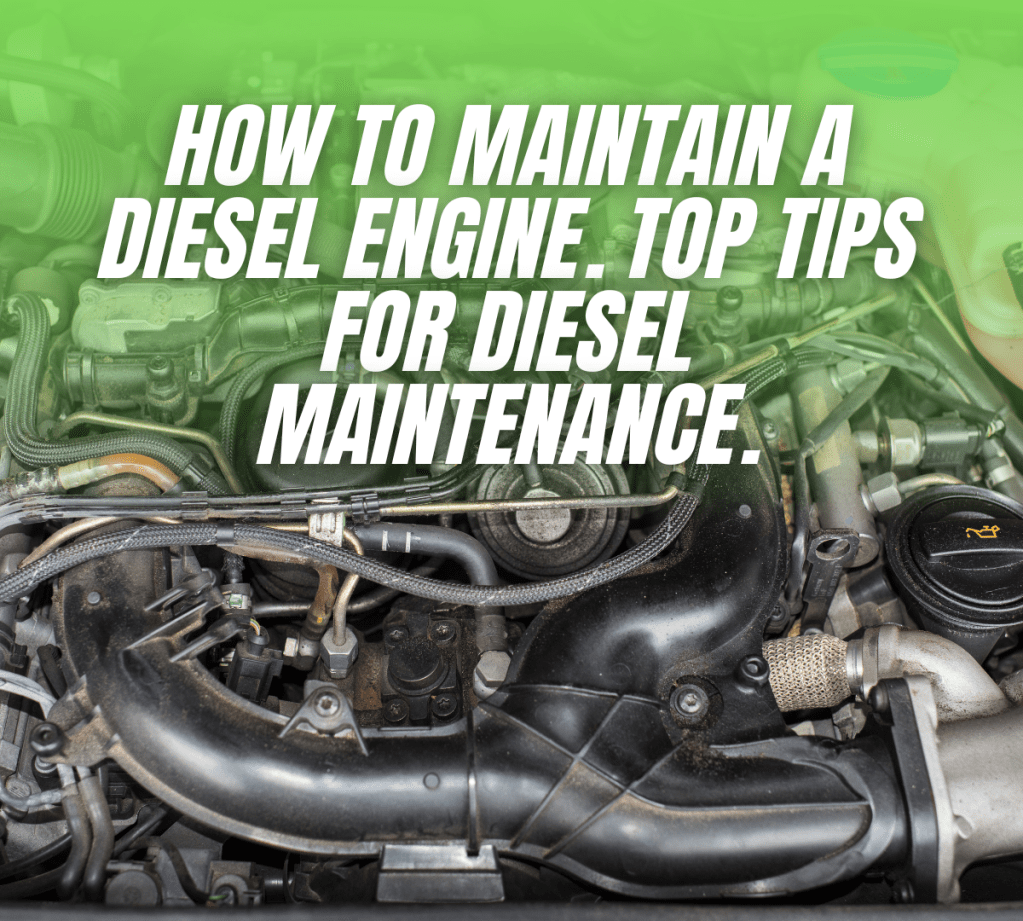
Welcome to the world of routine diesel maintenance! Just like taking care of ourselves with regular check-ups and healthy habits, your diesel vehicle needs some TLC too.
Routine maintenance is the key to keeping your diesel engine running smoothly and efficiently, ensuring it serves you faithfully for years. In this article, we’ll explore the essential tasks involved in routine diesel maintenance and why it’s vital for the health and longevity of your trusty diesel machine. So, buckle up and learn how a little care today can make a difference in your diesel’s performance!
How Does a Diesel Engine Work?
In the late 1800s, Rudolf Diesel introduced the diesel engine prototype, which Swiss engineer Alfred Büchi later turbocharged in 1925 to enhance its efficiency, creating the modern diesel engine we know today. German engineer Robert Bosch’s improvements to the fuel injection pumps in 1927, also played a significant role. Despite these advancements, the fundamental working principles of a diesel engine have remained constant.
A diesel engine is an internal combustion engine that operates by taking in air, compressing it, and then injecting fuel into the compressed air.
Unlike gasoline engines, diesel engines don’t need a spark plug; instead, the heat from the compressed air ignites the fuel, initiating combustion. This process goes through four stages, repeating continuously:
- The piston moves down, drawing in air.
- The piston moves up, compressing the air in the fuel cylinder. Diesel fuel is injected into the cylinder just before it reaches the top-dead-center for combustion.
- The piston descends again, with both intake and exhaust valves closed.
- The piston forces the combusted fuel out of the cylinder as exhaust.
Diesel engines have a higher compression ratio than gasoline engines, leading to improved efficiency. Additionally, many diesel vehicles have advanced emission control systems that help reduce harmful emissions, making them more environmentally friendly.
How Long Do Diesel Engines Last?
It depends on different things, but a diesel engine can last a long time – between 1,000,000 to 1,500,000 miles – before needing significant repairs. A diesel engine could keep running for around 30 years or even longer with good maintenance. So, caring for your diesel engine can keep it on the road for many miles and years.
Do They Last Longer Than Gasoline Engines?
Let’s compare! A gasoline car’s engine usually lasts around 200,000 miles before needing major repairs or a replacement. Quite a difference when you look at the diesel engine, which can go for 1-1.5 million miles!
So, why is the diesel engine so tough? Well, its design, the type of fuel used, and the vehicles with diesel engines play a part. Diesel engines are built with sturdier components, making them more durable. Also, they have a self-cooling ability that helps them stay strong under pressure. All these factors contribute to the impressive longevity of diesel engines.
Tips to Make Your Diesel Engine Last Longer
The diesel engine is impressive in how it works, but there are ways you can help it last even longer. Here are some top tips for drivers and fleet managers:
- Choose high-quality fuel: Get the best fuel you can afford and always fill the tank instead of just adding a little at a time.
- Let the engine cool down: Give your engine some cool-down time after every trip. When you stop, put it in neutral to keep the turbochargers in good shape.
- Keep a moderate RPM: Avoid high revving to protect your engine and gearbox from vibrations and damage.
- Clean those filters: Keep your diesel filters nice and clean to ensure smooth running.
- Show your vehicle extra care in winter: Give your truck some extra love during the colder months to keep it in great shape.
Why is Diesel Engine Maintenance Important?
Avoiding unexpected vehicle breakdowns is crucial for the success of commercial fleets and the drivers’ earnings.
When a diesel engine isn’t well-maintained, its lifespan shortens, and fuel efficiency decreases. The engine parts can wear out faster, leading to more downtime for the vehicle, especially if it travels on challenging roads and in various weather conditions.
Safety on the road is another critical aspect of diesel maintenance. A poorly maintained vehicle poses risks to the driver, cargo, and the business. A fleet safety solution can help prevent accidents and breakdowns, keeping drivers and fleet risk managers better prepared for unexpected incidents.
Common Diesel Engine Problems
It’s essential to keep up with routine servicing for your diesel engine. Neglecting oil and filter changes, as well as fluid analysis, can harm your engine’s health. Diesel engines run hotter than gasoline motors, so proper cooling system maintenance is crucial to avoid overheating. Remember to check your coolant regularly, as it can turn acidic over time, impacting your engine negatively.
Make sure to replace the diesel filter regularly to prevent it from “choking” your engine. A clogged filter can lead to weak acceleration and decreased engine power. Emptying the water separator for older diesel engines is vital to avoid damage from leaks or moisture residue. Also, let the engine reach the proper operating temperature for optimal efficiency.
For new diesel engines, consider using oil additives to enhance engine lubrication. These engines produce a lot of heat and water residue, and additives can help keep them running smoothly. In winter, use winterization additives to prevent fuel clogs and maintain efficiency. Taking care of your diesel engine will keep it running smoothly and efficiently for a long time.
Diesel Engine Maintenance Checklist
Keep your diesel engine in top shape with this easy checklist.
- Change oil and filters regularly.
- Check and maintain water control components.
- Ensure no water gets into the fuel tank.
- Keep the fuel injectors in good condition.
- Examine the alternator, radiator, compressor, and condenser mountings for any looseness or cracks.
- Check the vibration damper for cracks, bulges, shifting, or damage.
- Be on the lookout for unusual sounds and warning signs like fuel contamination, oil oxidation, or a black exhaust issue, which may indicate the need for repairs.
Stay on top of Your Diesel Engine Maintenance Schedule with 208 Diesel
Keeping up with regular maintenance is essential to ensure your diesel engine runs smoothly and efficiently. At 208 Diesel, we understand the importance of keeping your diesel engine in top shape. Our skilled technicians are ready to assist you with all your diesel engine maintenance needs. We’ve got you covered, from oil changes and filter replacements to fuel injector maintenance and cooling system checks.
Don’t wait for problems to arise; schedule a maintenance appointment with us today and let our experts help you stay on the road with confidence—Trust 208 Diesel for reliable and professional diesel engine maintenance in Nampa, ID, and beyond. Your engine will thank you with lasting performance and peace of mind on every journey.
Learn about all of our services here.
 208 Diesel Performance
Leave a comment